Transforming static files into interactive e-books.
Issuu is a digital publishing platform. People upload a PDF, and Issuu turns it into a flipbook, articles and social posts they can share, embed and sell. Its creators range from independent magazines to brands, schools and nonprofits. It runs on a freemium model: free to start, with paid plans that unlock more documents and features.
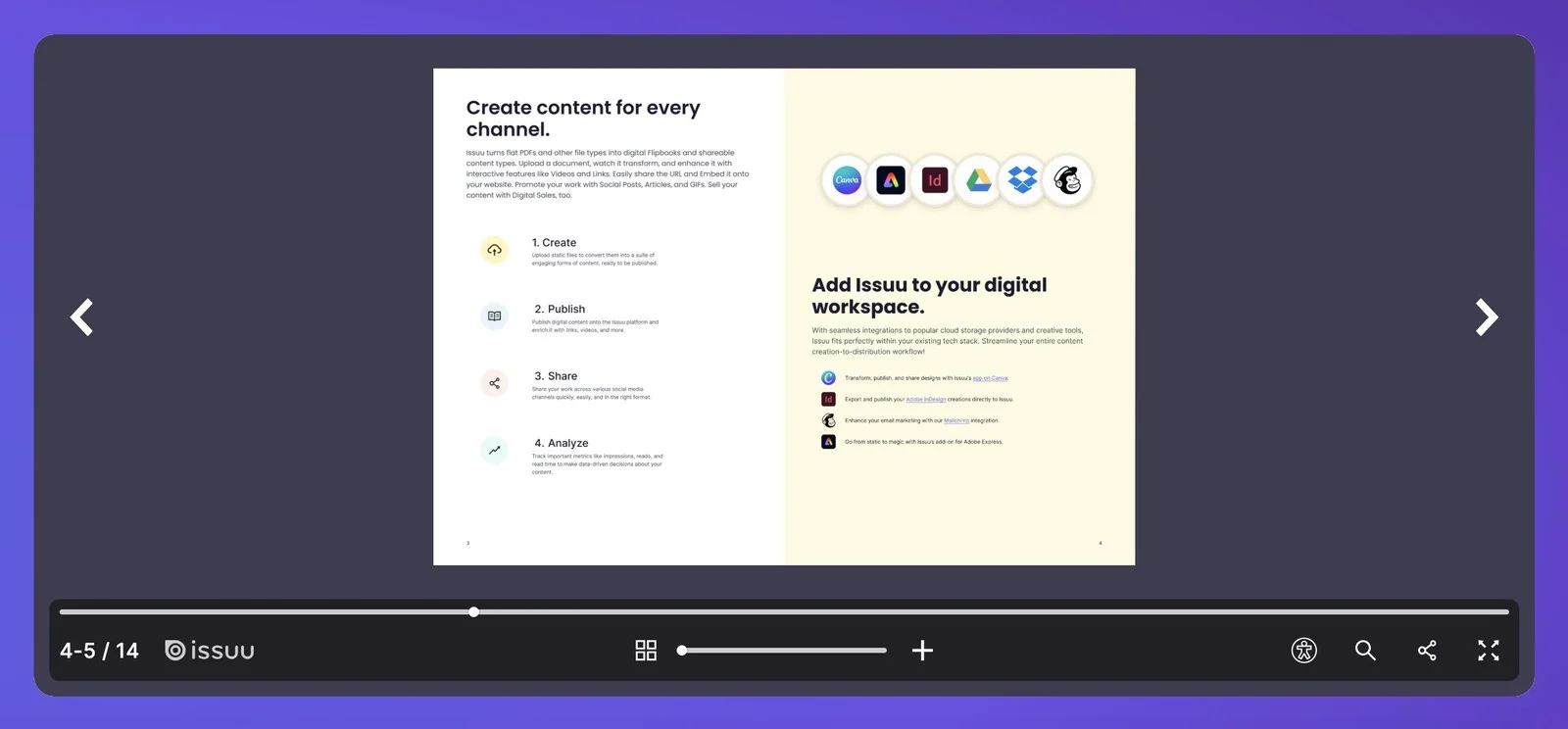
A PDF turned into an Issuu flipbook. Image: Issuu.
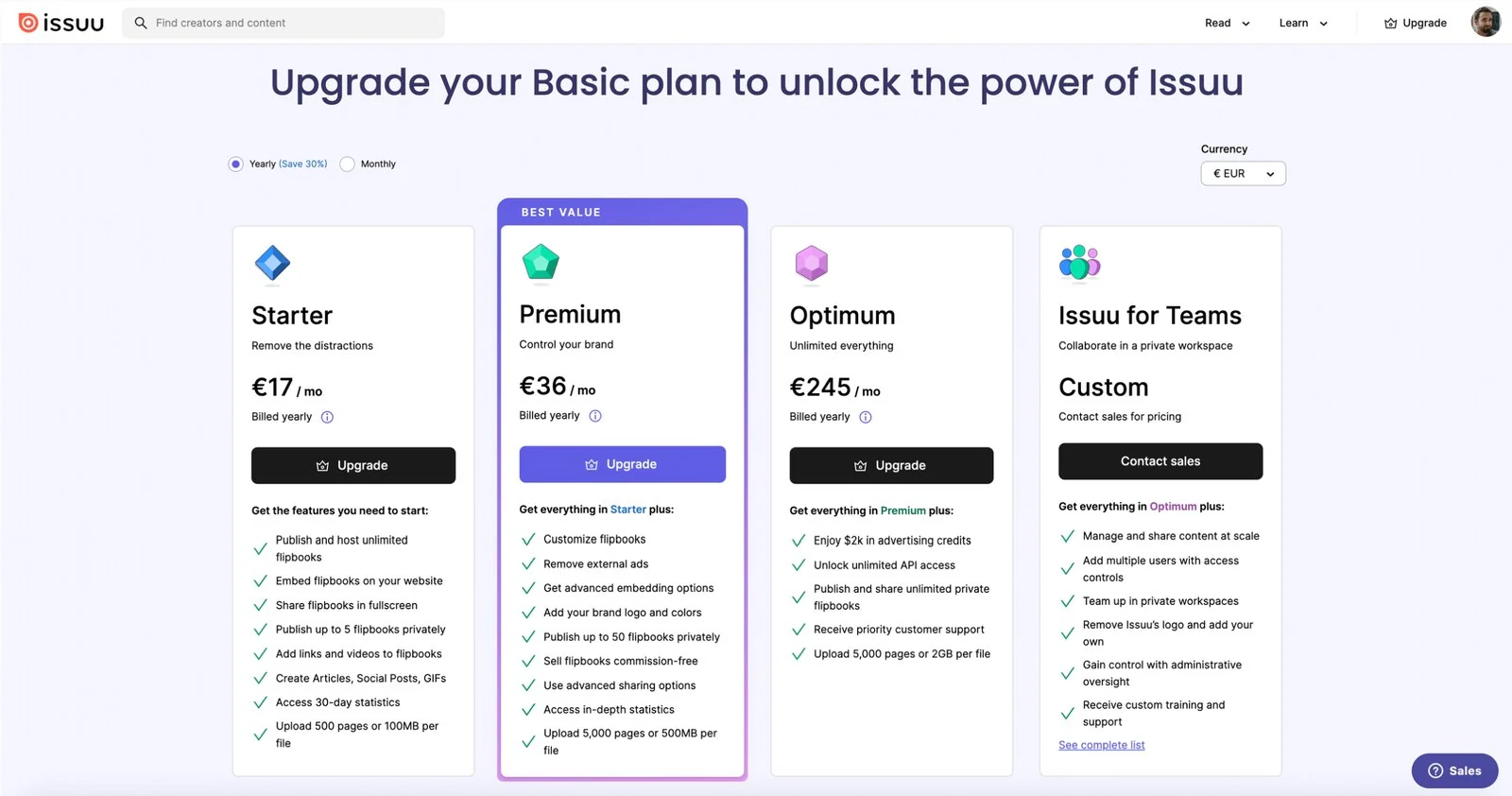
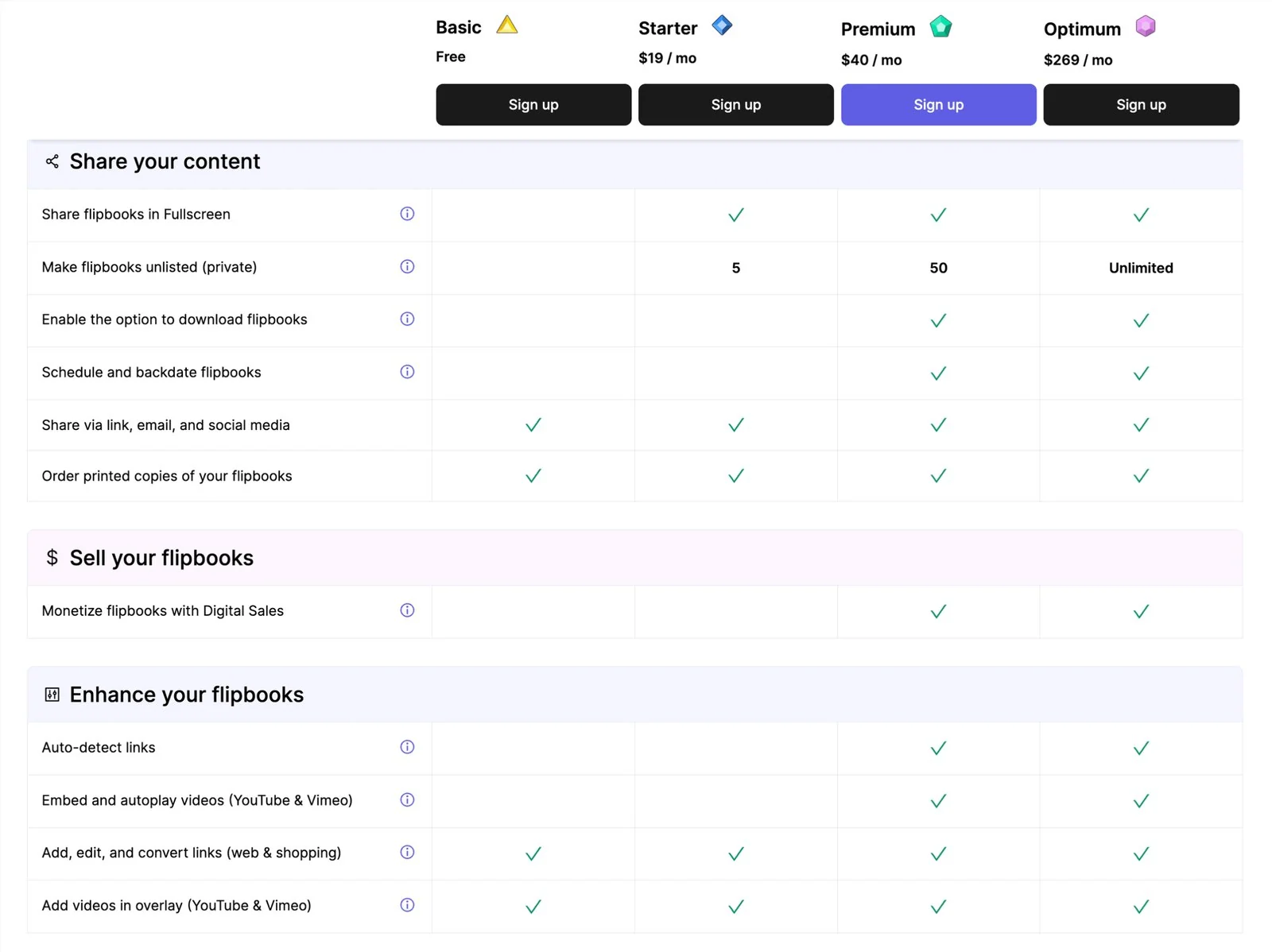
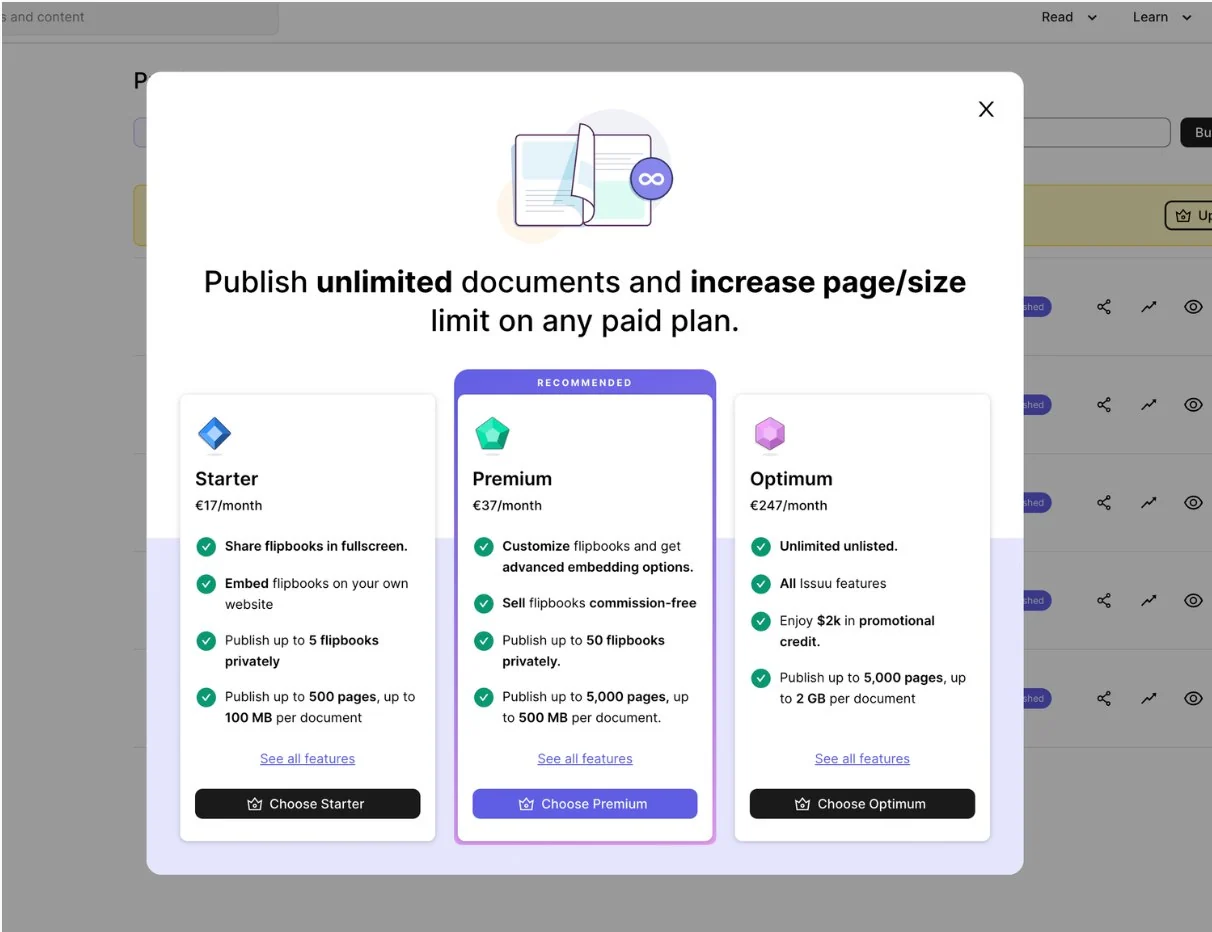
A pricing page and an upgrade page that explain value the same way.
The pricing page groups plans by what publishers want to achieve. The upgrade page uses the same groups and words, so upgrading feels like the next step, not a new pitch.
The redesigned upgrade page, in the same language as the new pricing page.
Three ways to show value at the decision.
The last one became Issuu’s most successful monetization initiative in my time there.
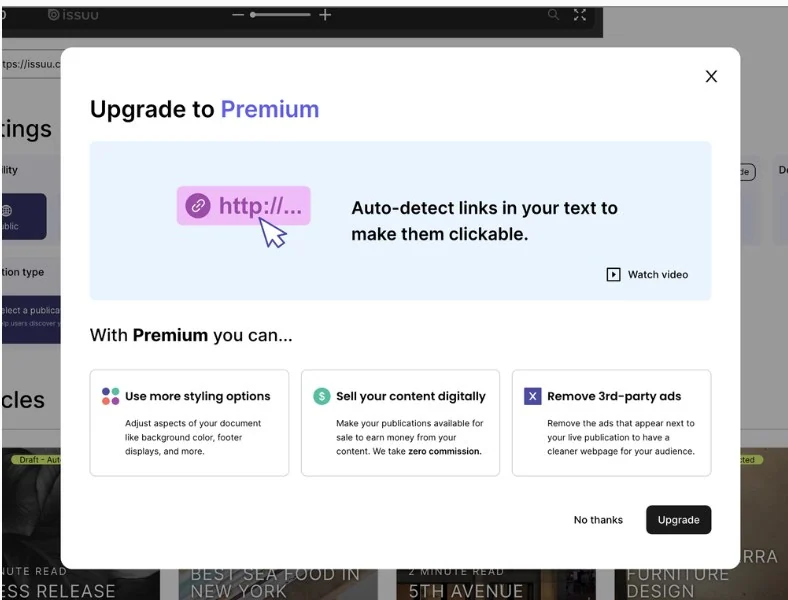
Contextual upgrade modalsPrompts that explain the feature you just reached for, and what a plan adds to it.
Pricing grouped by goalPlans regrouped around what publishers are trying to achieve, not long feature lists.
Doc limits that show the real valueFree plans publish up to five documents. Past the limit, you can still upload and see your converted document, just not publish it.
Originally, a file over the limit couldn’t even be uploaded. Letting people see the converted result first is the same idea as preview before sign-up: show the value, then ask for the commitment.
Without changing a single price, plan or feature, the redesigned pricing and upgrade pages lifted zero-day upsells by 35%.
+35%Zero-day upsells
Day oneMany people upgraded the day they signed up
Revenue ↑Revenue rose sharply
0Price, plan or feature changes
We didn’t change a single price, plan or feature. We only changed how the pricing and upgrade pages explained them. Zero-day upsells rose 35%: people converted sooner, often on the day they signed up. Revenue rose sharply as a result.
That is the real achievement here: design alone, by explaining existing value clearly at the moment of decision, changed how quickly people chose to pay.
Each test ran 50/50 for at least two weeks, against the old page as the control. Conversion rose on every paid plan, annual sign-ups rose, and doc limits drove a lasting increase in upgrades.