Voloplan is a startup I’m co-founding with a former Issuu colleague: a task planner, a calendar and an AI thought partner in one view of work and personal life. It’s two things at once. It’s a product researched, designed and built end to end with AI tools, and it’s our own business, built to scale. It’s currently in beta.
People’s to-dos are scattered across their whole life, and no tool shows them together.
Work tasks live in team boards and work calendars, family plans in group chats, errands in notes apps, on paper and in people’s heads. For someone in a demanding season of life, like a working parent of young children, these priorities compete for the same hours but never appear in the same place. That makes it hard to coordinate with a partner, family and friends, or to notice which part of life keeps losing.
Tasks come up at work, at home and in the group chat→
Each lands in a different app, or stays in your head→
Priorities compete without being seen together→
Something slips, and nobody sees which part of life is losing
After
Tasks come up anywhere→
Brain-dump them to Volo→
Approve dated tasks, sorted by life area→
See work and life side by side on one board→
Reflect each week on plan versus reality
Where it broke downWhat changed
One board for every part of life, and an agent that helps you steer.
Work and personal tasks sit on one taskboard, sorted into life areas people name themselves, like Work, Kids, Partner, Health or Home. People talk to Volo on the go, and it turns what they say into dated tasks, sorted into life areas, that they approve. Calendars connect to the life area they belong to, and a weekly check-in compares how each area moved, so people see where they’re building momentum and where they’ve stalled.
Screens from the Voloplan beta.
All names and tasks are sample data.
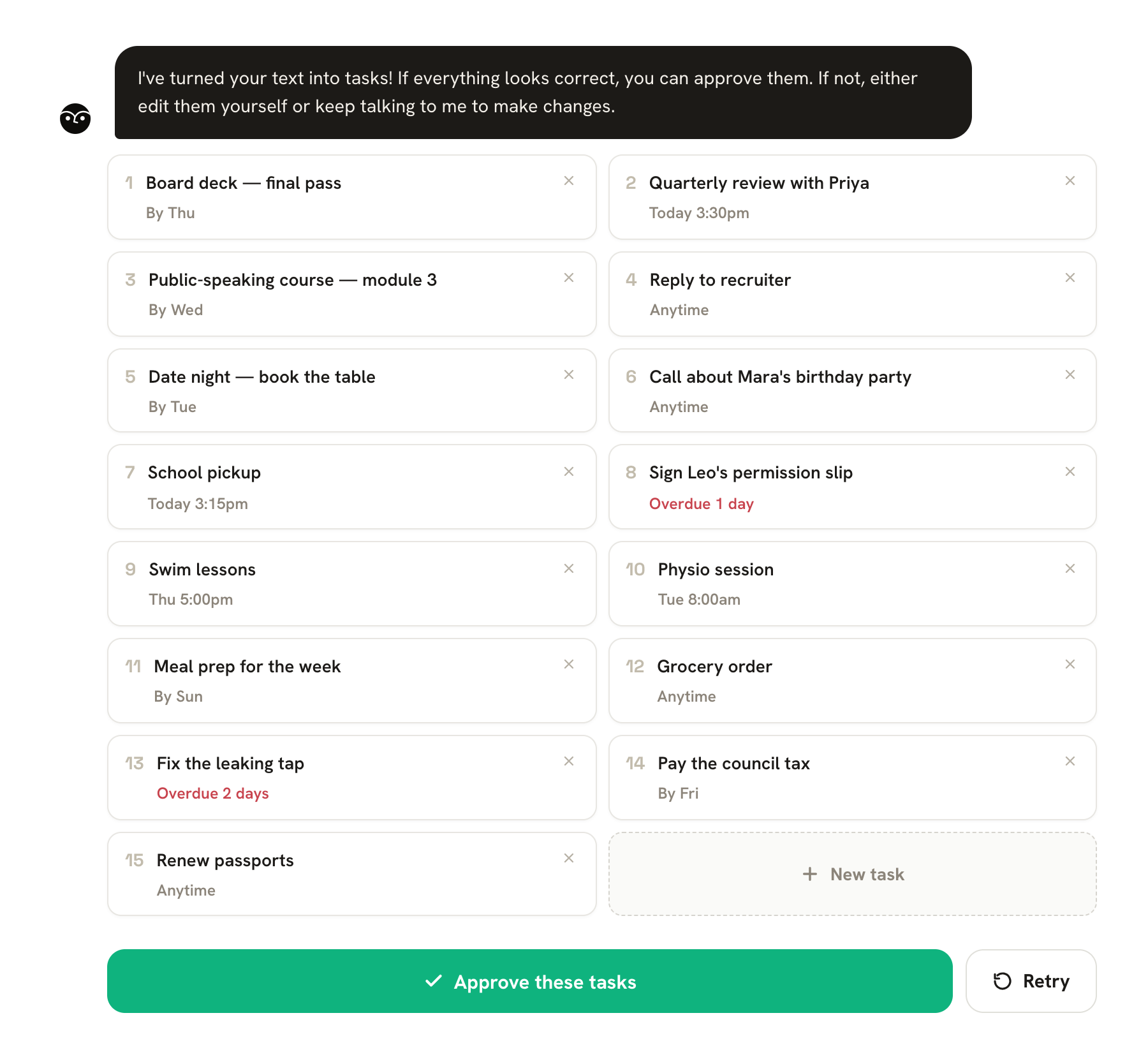
Talk to Volo on the go, then approve the planSay or type everything on your mind. Volo turns it into dated tasks, sorts each one into its life area, and nothing lands on the board until you approve it. It’s designed for your phone, so a task you think of at school pickup goes straight into the plan instead of into yet another app.
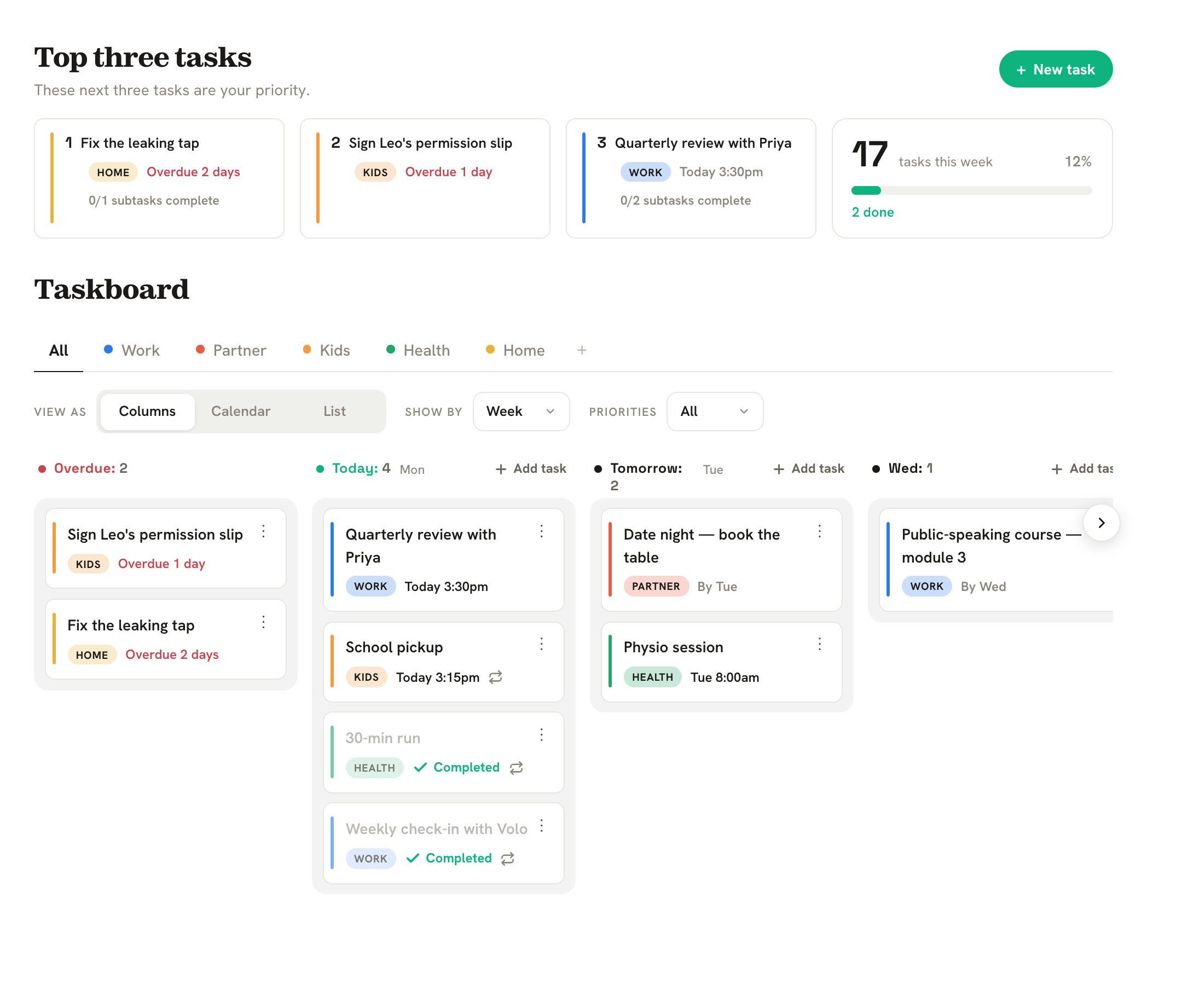
Work and life on one boardThe three tasks that matter most today sit on top, with everything else lined up behind them by day, work and personal side by side.
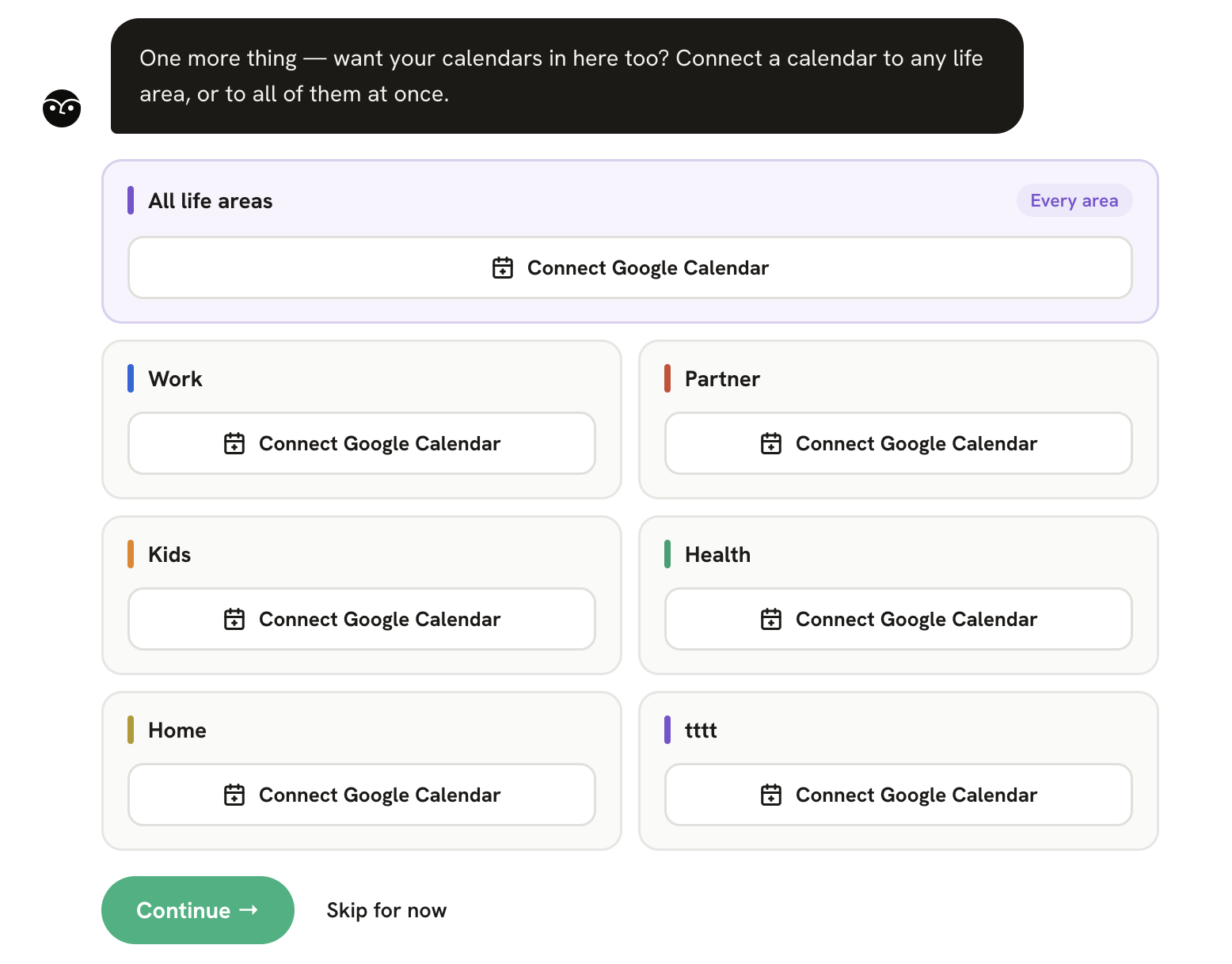
Every calendar in the life area it belongs toConnect a calendar to one life area or to all of them, so meetings, kids’ schedules and personal plans sit next to the tasks they relate to.
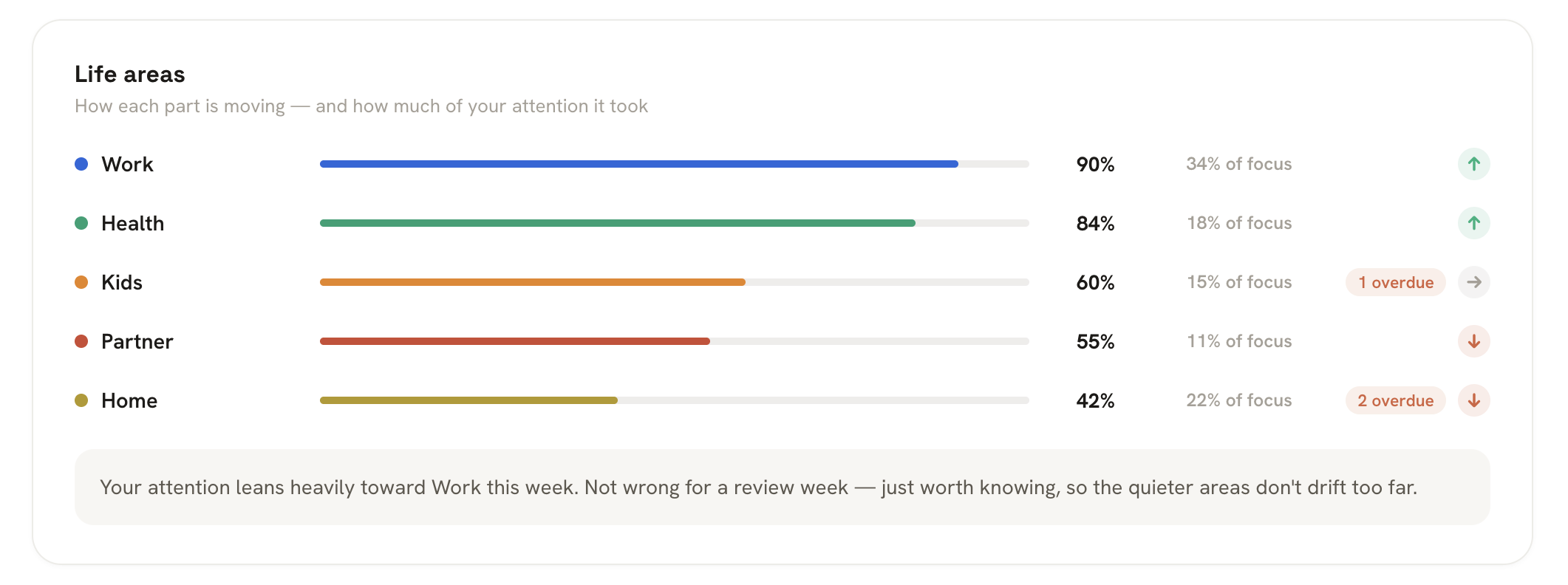
See where you’re moving, and where you’ve stalledEach week, every life area shows how much got done and how much attention it took, so the gap between plan and reality is visible, and Volo reflects on it with you.
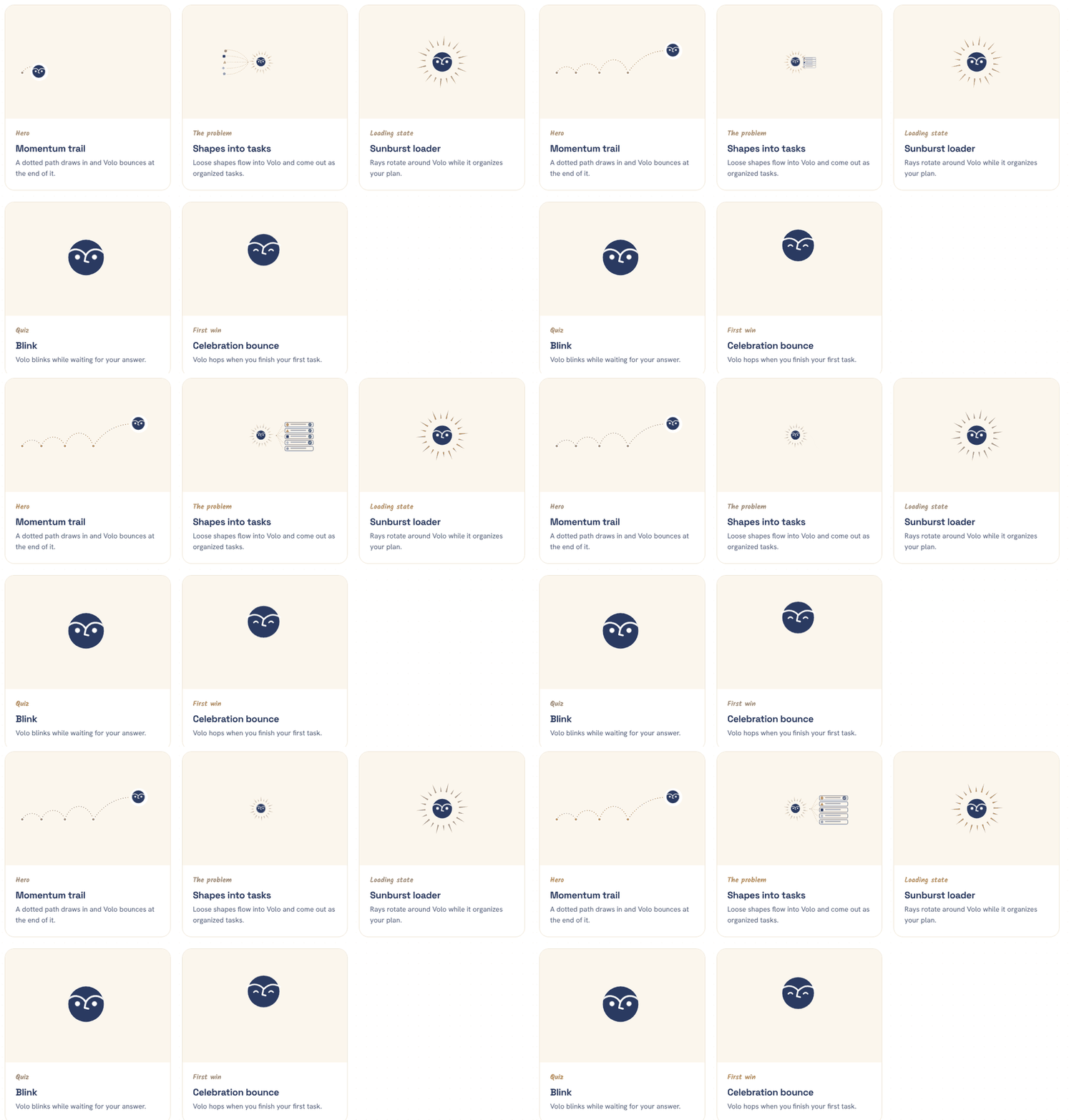
Volo: a character, not a chatbotA lot of the work went into Volo itself: a character inspired by the owls of Greek mythology, drawn by hand rather than built by a machine. It blinks while you answer, hops when you finish your first task, and radiates a sunburst while it organizes your plan. Each animation has one job in the product.
Voloplan is live in beta with dozens of testers, and their feedback was strong enough for us to scale it into a real product, with a sharper focus on families.
Dozens of testersOf different ages and life stages, validating our assumptions in a live beta
Very positiveFeedback from the testers who engaged with the tool
Scaling upBuilding a backend with engineers that can hold tens of thousands of users
Our own plannerBoth founders plan their own work and family life in it
We’ve tested Voloplan with dozens of people of different ages and stages of life. Feedback has been very positive among the people who engaged with it, and that’s what convinced us to take Voloplan further. My co-founder and I also plan our own work and family responsibilities in it every day.
The biggest learning so far: the product isn’t the code. It’s the understanding of how people see their own lives, their problems and their priorities, and that only comes from sitting with them.